You Won’t Believe What These Walls Have Seen — Hue’s Architecture Speaks
Walking through Hue, Vietnam, feels like stepping into a living history book. The air hums with stories, and every courtyard, gate, and tile tells a quiet, powerful tale. I didn’t expect to be so moved by stone and wood — but the imperial tombs, the Citadel, the ancient pagodas? Absolutely breathtaking. This city doesn’t just showcase Vietnam’s royal past — it lets you feel it. In this journey, we’ll explore the architectural soul of Hue, where design and legacy merge in the most immersive way. From grand imperial palaces to riverside pagodas and humble ancestral homes, each structure reveals not only aesthetic mastery but also the resilience, beliefs, and daily rhythms of generations. This is more than sightseeing — it’s an emotional conversation with time.
The Imperial Citadel: A Palace Frozen in Time
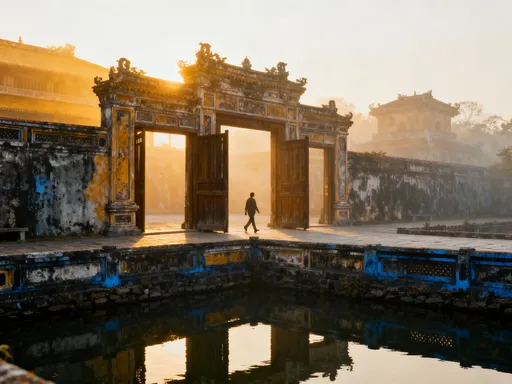
The heart of Hue’s historical identity beats strongest within the walls of the Imperial Citadel, a vast fortress complex that once served as the political and spiritual center of the Nguyen Dynasty, Vietnam’s last royal family. Built in the early 19th century under Emperor Gia Long, the Citadel spans over 520 hectares and follows traditional geomantic principles rooted in Confucian philosophy and East Asian urban planning. Its layout mirrors the Forbidden City in Beijing, with a series of concentric enclosures protecting the most sacred spaces — the most restricted being the Forbidden Purple City, where only the emperor, his family, and select officials could enter. The outer walls, standing nearly 7 meters high and reinforced with stone and brick, are surrounded by a wide moat, creating a formidable barrier both physically and symbolically.
Every architectural choice within the Citadel reflects a deep understanding of balance, hierarchy, and cosmic harmony. The symmetry of its gates, courtyards, and administrative halls was not merely aesthetic — it represented order in governance and the emperor’s role as the mediator between heaven and earth. The main thoroughfare, known as the Noon Gate or Ngo Mon, serves as the grand entrance and was historically used only by the emperor during ceremonial processions. Today, visitors pass beneath its towering arches, stepping into a world where once-daily rituals, court meetings, and imperial celebrations unfolded. Though much of the original wooden architecture was lost during the intense fighting of the 1968 Tet Offensive, ongoing restoration efforts have brought key structures back to life, including the Thai Hoa Palace, the throne hall with its ornate dragon-adorned roof and elevated platform.
Walking through the Citadel today is a layered experience — part historical exploration, part quiet reflection. The scent of frangipani lingers in the courtyards, mingling with the faint trace of aged timber and damp stone. Children’s laughter echoes from schoolyards now housed in former administrative wings, a reminder that history is not frozen but continues to unfold. While some buildings remain skeletal or marked by bullet scars, these imperfections add depth rather than detract from the site’s power. They speak of survival, of a culture determined to preserve its heritage despite decades of upheaval. For the visitor, especially one interested in how architecture shapes identity, the Citadel offers a profound lesson: that walls do more than enclose — they witness, endure, and remember.
Tomb of Khai Dinh: Where East Meets West in Stone
Rising on the slopes of Chau Chu Mountain, the Tomb of Khai Dinh stands apart from other imperial resting places in both style and sentiment. Completed in 1931, it belongs to Emperor Khai Dinh, who ruled during a turbulent period of French colonial dominance. Unlike the naturalistic, garden-like tombs of his predecessors, Khai Dinh’s mausoleum embraces a striking fusion of Vietnamese imperial symbolism and European architectural influences, resulting in a structure that feels both majestic and somewhat alien within the landscape. Constructed over 11 years with forced labor and funded through increased taxation, the tomb has long been a subject of controversy — not for its spiritual significance, but for its opulence amid widespread poverty and national subjugation.
The tomb’s most immediate impression is one of density and intricacy. Built primarily from concrete — a modern material at the time — it incorporates stained glass windows, European-style statues, and bas-reliefs crafted by French-trained Vietnamese artisans. The ascending pathway leads through a series of terraces, each marked by stone elephants and mandarin figures, culminating in the main sepulchral hall. Inside, the atmosphere is hushed and richly adorned: walls shimmer with mother-of-pearl inlays depicting dragons, phoenixes, and lotus blossoms, while chandeliers cast a soft glow over the emperor’s lacquered coffin. The synthesis of styles is deliberate — Khai Dinh saw himself as a modernizer, bridging two worlds. Yet for many Vietnamese, the tomb remains a painful reminder of cultural compromise under colonial rule.
Despite its complex legacy, the Tomb of Khai Dinh offers a compelling visitor experience. The climb rewards with panoramic views of rolling hills and patchwork rice fields, grounding the monument in the natural beauty of central Vietnam. Tourists often pause at the bronze statue of the emperor in Western-style royal attire, reflecting on the contradictions of his reign. Guides recount stories of the laborers who hauled materials up the mountain by hand, their suffering etched into the very stones. To stand here is to confront the nuances of history — not all heritage is comforting, but all of it is instructive. The tomb does not invite easy admiration, but it demands attention, challenging visitors to look beyond surface beauty and consider the weight of power, identity, and foreign influence in shaping a nation’s monuments.
Thien Mu Pagoda: The Soul Perched by the River
Perched gracefully on the northern bank of the Perfume River, Thien Mu Pagoda is one of Hue’s most iconic and spiritually resonant landmarks. Its name, meaning “Celestial Lady,” originates from a local legend in which a divine figure appeared on this hillside, prophesying the construction of a Buddhist temple to bring peace to the land. Founded in 1601 and expanded over centuries, the pagoda embodies the harmonious integration of religious devotion, architectural elegance, and natural setting. At its center stands the seven-tiered Phuoc Duyen Tower, a slender octagonal steeple that rises 21 meters into the sky, its curved roofs layered like ascending waves. Each level represents a stage on the path to enlightenment, and the entire structure aligns with traditional Buddhist cosmology.
The architecture of Thien Mu blends Vietnamese craftsmanship with Buddhist symbolism in a way that feels both serene and majestic. Dragons coil along roof ridges, their sinuous forms guarding against evil spirits, while lotus motifs — symbols of purity and rebirth — appear in carvings and paintings throughout the compound. The grounds are arranged in a series of interconnected halls and pavilions, housing statues of Buddha, bodhisattvas, and ancestral tablets. What distinguishes Thien Mu from many other religious sites is its continued function as an active monastery. Monks in saffron robes move quietly between buildings, chanting in the early morning hours, their presence adding a living rhythm to the stone and wood. The scent of incense weaves through the air, mingling with the damp earth after rain, creating a sensory experience that deepens the sense of tranquility.
Photographers and pilgrims alike are drawn to the pagoda’s riverside vantage, where the reflection of the tower ripples in the water at sunrise. This view has become emblematic of Hue, capturing the city’s quiet dignity and spiritual depth. But beyond the postcard beauty, Thien Mu carries historical weight. In 1963, a monk named Thich Quang Duc famously drove the pagoda’s car to Saigon to participate in a protest against religious persecution, an event that drew global attention. Today, the vehicle remains on display, a silent testament to the role of faith in Vietnam’s social history. For visitors, Thien Mu is not merely a stop on a tour — it is a place to pause, breathe, and listen. The bells still ring at dawn and dusk, their tones carrying across the river like echoes of centuries past.
Tomb of Minh Mang: Harmony with Nature and Design
If Khai Dinh’s tomb speaks of ambition and contradiction, the Tomb of Minh Mang sings of balance, order, and reverence for nature. Completed in 1843, this expansive complex honors Emperor Minh Mang, a ruler known for his strict adherence to Confucian principles and his efforts to centralize imperial authority. Located on a forested hillside near the Perfume River, the tomb is designed as a microcosm of the universe, where architecture and landscape are inseparable. Unlike Western mausoleums that dominate their surroundings, Minh Mang’s tomb blends into the terrain, using lakes, causeways, and winding pathways to guide visitors through a carefully orchestrated journey of reflection and respect.
The layout follows a north-south axis, with gates, pavilions, and spirit roads aligned to reflect cosmic order. The centerpiece is the stele pavilion, which houses a massive stone tablet mounted on a tortoise — a symbol of longevity and wisdom in Vietnamese culture. Carved in classical Chinese, the inscription praises the emperor’s virtues and achievements, serving both as a historical record and a moral lesson. Surrounding the central complex are smaller halls dedicated to imperial concubines and officials, reinforcing the hierarchical structure of the court even in death. The use of natural materials — grey stone, baked tile roofs, and dark wood — gives the site a subdued elegance, allowing the beauty of the setting to take precedence.
One of the most striking features is the way water is incorporated into the design. Ponds reflect the surrounding trees and buildings, creating a sense of stillness and doubling the visual space. Visitors cross narrow bridges over lotus-filled lakes, each step marking a transition from the worldly to the sacred. The tomb’s scale requires walking — about 30 minutes to traverse from entrance to burial chamber — but the pace encourages mindfulness. Families often come together, elders sharing stories with younger generations as they stroll along shaded paths. For tourists, early morning is ideal: mist hovers over the water, birds call from the trees, and the light filters softly through the canopy. This is architecture not as spectacle, but as invitation — to slow down, to observe, to honor.
Beyond the Royals: Vernacular Architecture in Old Hue Houses
While the grandeur of imperial monuments captures headlines, the true soul of Hue’s architectural heritage lives in its quieter corners — the narrow lanes of the old city, where traditional tube houses and ancestral homes stand as enduring testaments to everyday life. These structures, often just 4 to 5 meters wide but stretching deep into the block, were designed for dense urban living and adapted ingeniously to the tropical climate. High ceilings, wooden shutters, and inner courtyards allow for cross-ventilation, keeping interiors cool despite the region’s humidity. Tiled roofs, sometimes curved at the edges, shed heavy monsoon rains, while thick brick walls provide insulation against heat.
What makes these homes particularly special is their integration of family life and spiritual practice. Many include a central ancestral altar, often placed in the coolest, most private part of the house, where offerings of fruit, incense, and tea are made daily. The layout reflects Confucian values — elders are given the most honored rooms, and the flow of movement respects generational hierarchy. Over time, some of these homes have been converted into guesthouses, cafes, or small museums, allowing visitors to experience traditional living spaces firsthand. One can sip Vietnamese coffee in a courtyard shaded by banana trees, or stay overnight in a restored house where the creak of wooden floors and the rustle of bamboo evoke a slower, more intimate way of life.
Preservation of these vernacular buildings is a quiet but vital effort. Unlike the large-scale restoration of imperial sites, this work is often led by families and local cooperatives who value cultural continuity over tourism revenue. They repair roofs with handmade tiles, restore hand-carved balustrades, and maintain gardens with native plants. For the discerning traveler, walking these lanes offers a deeper understanding of Hue — not as a museum, but as a living city where history is not behind glass, but in the walls, the doorways, the daily rituals. These homes remind us that architecture is not only about kings and emperors, but about mothers, artisans, and generations who built their lives within these walls.
Restoration and Resilience: How Hue Rebuilds Its Past
The survival of Hue’s architectural treasures is nothing short of remarkable, given the extensive damage inflicted during the 20th century, particularly during the Vietnam War. The 1968 Battle of Hue left the Imperial Citadel in ruins, with over 80% of its structures either destroyed or severely damaged. Fires, artillery, and neglect took a heavy toll. Yet, in the decades since, a quiet but determined effort has unfolded to restore what was lost — not through imitation, but through meticulous, research-driven reconstruction. This work is guided by the principle of authenticity, prioritizing traditional materials and techniques over speed or cost-efficiency.
UNESCO’s designation of the Complex of Hué Monuments as a World Heritage Site in 1993 was a turning point, bringing international attention and funding to preservation projects. Vietnamese heritage teams, often working in collaboration with foreign experts, use historical photographs, blueprints, and oral histories to guide their efforts. Lime-based mortars, once the standard in pre-colonial construction, have replaced modern cement, which can trap moisture and accelerate decay in ancient brickwork. Woodworkers carve new roof brackets and panels using the same chisels and patterns as their ancestors, ensuring that every replacement piece honors the original design. Even the colors — soft yellows, deep reds, and royal blues — are matched using natural pigments derived from local minerals and plants.
Yet restoration is not without challenges. The region’s humid climate and frequent storms threaten even well-maintained structures. Rising tourism adds pressure, with foot traffic and environmental wear requiring constant monitoring. Ethical stewardship means balancing accessibility with preservation. Visitors can support this work by choosing responsible tour operators, avoiding touching fragile surfaces, and respecting restricted areas. Some sites offer donation boxes or volunteer opportunities for those who wish to contribute directly. Ultimately, the rebirth of Hue’s architecture is not just about rebuilding stone and wood — it’s about renewing a cultural commitment to memory, identity, and continuity. Every restored gate, every repaired roof tile, is a statement: we remember, and we choose to preserve.
Immersive Travel: Engaging with Architecture Beyond Sightseeing
To truly understand Hue’s architecture, one must move beyond the camera lens and engage the senses, the mind, and the heart. The city invites a slower, more thoughtful form of travel — one that values presence over pace. Dawn visits to the Citadel allow travelers to experience the site before crowds arrive, when sunlight filters through the trees and the only sounds are birdsong and distant temple bells. Sketching a pagoda’s roofline or journaling in a quiet courtyard can deepen one’s connection to the space, transforming observation into reflection. Guided tours led by local historians or former conservators offer insights that no brochure can provide — stories of hidden inscriptions, symbolic placements, and the meaning behind a single carved dragon’s pose.
Architecture in Hue is not static; it is experienced through movement, light, and time. A walk along the Perfume River at dusk reveals how the water mirrors the changing sky and the silhouettes of ancient towers. The scent of lotus blooms near Minh Mang’s tomb, the cool touch of stone under hand, the echo of footsteps in an empty hall — these sensory details anchor memory and create lasting emotional resonance. Travelers are encouraged to design itineraries that connect sites thematically: a morning at Thien Mu, followed by a boat ride past royal gardens, then an afternoon exploring ancestral homes. Such journeys reveal patterns — how water, symmetry, and nature recur across different scales and purposes.
For women between 30 and 55, many of whom travel with family or seek meaningful solo experiences, Hue offers a rare opportunity: to step into a world where beauty and history coexist with grace and resilience. It is a place where one can feel both small in the face of centuries and deeply connected to the human stories etched into every wall. The architecture of Hue does not shout — it whispers. And if you listen closely, it tells you that legacy is not just preserved in stone, but carried forward in the way we choose to see, honor, and remember.