You Won’t Believe This Arctic Cityscape Hidden in Norway’s Wild North
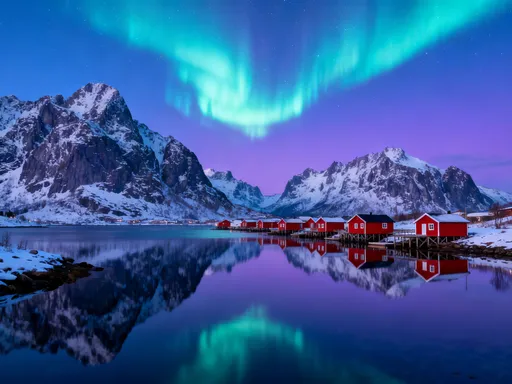
Have you ever seen mountains rise straight from the sea under a sky painted with northern lights? That’s Lofoten. This Norwegian archipelago isn’t just dramatic—it’s alive with color, light, and a quiet energy that pulls you in. Forget concrete skylines; here, the cityscape is carved by nature: red fishing huts cling to fjords, snow-capped peaks mirror in still waters, and villages breathe with the rhythm of the tides. I walked its shores, stayed in a rorbu cabin, and felt time slow down. What unfolds across these islands is not a city in the traditional sense, but something deeper—a human imprint shaped by centuries of tides, storms, and light. This is a place where architecture bows to geography, and daily life unfolds in harmony with the wild. For travelers seeking beauty with meaning, Lofoten offers a rare vision: a cityscape born not from steel and glass, but from resilience, tradition, and the untamed North.
First Light Over Lofoten – A Landscape That Feels Unreal
Arriving by air, the first glimpse of Lofoten steals your breath. As the small plane descends toward Svolvær, the capital of the archipelago, jagged granite peaks pierce through low-hanging clouds like ancient sentinels. The land doesn’t gently slope into the sea—it erupts from it, rising in dramatic spires and ridges that cast long shadows across mirror-still fjords. This is not a landscape shaped by urban planning, but by glacial forces and tectonic time. And yet, scattered among the coves and inlets are clusters of bright red and yellow wooden cabins, docks lined with fishing boats, and narrow roads that cling to the coastline. These are the human notes in an otherwise primal symphony.
What makes Lofoten so disorienting at first is how it redefines the idea of a cityscape. In most of the world, cities announce themselves with skylines, traffic, and density. Here, there are no towering buildings, no sprawling suburbs—only small communities that appear almost as afterthoughts to the mountains. And yet, this is civilization, refined by necessity. The settlements follow the contours of the land, built where flat ground allows, where shelter from the wind is possible, and where access to the sea supports livelihoods. The rhythm of life here is dictated not by clocks, but by tides, seasons, and the availability of light.
The Arctic light plays a crucial role in shaping perception. Even on overcast days, the clarity is astonishing—colors are more vivid, distances more deceptive, and shadows more defined. In summer, the sun never fully sets, bathing the islands in a golden twilight that lasts for weeks. In winter, the darkness is deep, but when the northern lights appear, they dance across the sky in ribbons of green and violet, reflecting off snow-covered peaks and icy waters. This interplay of light and terrain creates a sense of unreality, as if you’ve stepped into a painting that changes with every hour.
What surprises most visitors is not just the beauty, but the feeling of being enveloped by it. There’s no barrier between nature and habitation. You don’t view the landscape from a distance—you are inside it. The mountains are not scenery; they are neighbors. The sea is not a backdrop; it’s a constant presence, heard in the crash of waves and smelled in the salty air. This immersion is what makes Lofoten not just a destination, but a transformation.
The Soul of the Islands: Fishing Villages as Living Cityscapes
At the heart of Lofoten’s charm are its fishing villages—places like Nusfjord, Reine, and Henningsvær—each a living example of how human settlement can thrive in harmony with extreme environments. Nusfjord, one of the oldest fishing villages in Norway, dates back to the 18th century and has been preserved as a cultural heritage site. Its cluster of rorbuer—traditional fishermen’s cabins—lines the shore, connected by wooden walkways and surrounded by steep mountains. There are no supermarkets or chain stores, only a small museum, a restaurant, and the quiet hum of history.
These villages are not museum pieces frozen in time. They are working communities where fishing remains central to life. Every winter, cod migrate to the warm currents around Lofoten, drawing fishermen from across Norway. The air fills with the scent of drying fish—stockfish—hung on wooden racks called hjell. This centuries-old method of preservation is still practiced today, linking modern life to ancient traditions. The layout of each village reflects function: docks are placed where boats can safely land, cabins are built on stilts to avoid flooding, and paths wind through the terrain with practicality in mind.
Reine, often called the most beautiful village in Norway, sits at the end of a long fjord, surrounded by peaks like Reinebringen and Vinnan. Its compact design—fewer than 100 permanent residents—creates an intimate scale. There are no traffic lights, no high-rises, no noise beyond the wind and waves. Yet, it functions fully: there’s a school, a church, a grocery store, and guesthouses that welcome travelers. The community’s resilience is evident in how it has adapted to tourism without losing its identity. Visitors are welcomed, but not at the expense of local life.
Henningsvær, known as the “Venice of the North,” is built across several small islands connected by bridges. Its harbor is alive with activity—fishing boats, kayaks, and small ferries crisscross the water. The village has a small football pitch perched on a rocky outcrop, a quirky detail that captures the spirit of making space where none seems to exist. There’s a gallery, a brewery, and a few shops selling local crafts, but the dominant presence is still the sea. These villages prove that a cityscape does not require density or height to feel vibrant. What matters is connection—to the environment, to history, and to one another.
Architecture in Harmony – How Buildings Belong to the Land
In most cities, architecture competes with nature. In Lofoten, it collaborates with it. The buildings here—mostly wooden, brightly painted, and raised on stilts—are designed not to dominate, but to survive and blend. The traditional rorbu is the archetype: a small, rectangular cabin with a pitched roof to shed snow, walls thick enough to insulate against Arctic winters, and colors chosen for visibility and warmth. Red, yellow, and orange stand out against the grey rock and dark water, acting as visual anchors in a landscape that can feel overwhelming in its scale.
These structures are not decorative. Every design choice responds to environmental demands. The stilts protect against flooding and allow air to circulate beneath, preventing moisture buildup. The steep roofs prevent snow accumulation, which could collapse weaker structures. The windows are small to reduce heat loss, yet positioned to capture as much light as possible during the short winter days. Even the placement of cabins follows natural logic—grouped for mutual shelter, oriented away from prevailing winds, and built on bedrock where possible.
Modern architecture in Lofoten follows the same principles. New lodges and homes use local materials like timber and stone, maintaining the visual language of the past. Glass walls are common, but not for show—they frame the landscape, turning every view into a living painting. Some boutique hotels are built into the mountainside, their roofs covered in grass to blend with the terrain. This is not imitation of nature, but integration. The result is a built environment that feels inevitable, as if it grew from the land rather than being imposed upon it.
Contrast this with urban planning in most of the world, where buildings are often designed for maximum space, profit, or status. In cities, scale is dictated by economics, not ecology. But in Lofoten, human presence is measured, humble, and responsive. There are no attempts to flatten the land or conquer the weather. Instead, there is adaptation, patience, and respect. This philosophy offers a powerful lesson: beauty in architecture does not come from grandeur, but from belonging.
Light and Season – The Shifting Face of the Cityscape
Nowhere does light shape experience more profoundly than in Lofoten. The archipelago lies above the Arctic Circle, meaning it experiences both the midnight sun in summer and the polar night in winter. These extremes transform not just the appearance of the landscape, but the rhythm of life. In June and July, the sun never dips below the horizon. The world is bathed in continuous daylight, casting long, soft shadows that shift almost imperceptibly. Mornings, afternoons, and evenings blur into one golden stretch. This constant illumination energizes the senses—colors are more intense, sounds travel farther, and time feels suspended.
During the polar night, from late November to mid-January, the sun does not rise at all. The islands exist in a state of twilight for several hours each day, with the rest in deep darkness. At first, this can feel oppressive, but it brings its own magic. The snow-covered ground reflects whatever light exists, turning the landscape into a monochrome dreamscape. And when the northern lights appear—often visible on clear nights—their movement across the sky transforms rooftops, mountains, and sea into a living canvas. The silence is profound, broken only by the wind or the occasional crack of ice in the fjord.
These seasonal extremes influence how the cityscape is perceived and used. In summer, outdoor life flourishes. People dine on docks, hike mountain trails at midnight, and kayak through glassy waters. The villages feel expansive, open, and alive. In winter, life moves indoors. Homes are warm and brightly lit, with candles and wood stoves creating a sense of coziness known in Norwegian as *kos*. The contrast between the cold outside and the warmth within is stark, but comforting. Streets are quieter, routines slower, and conversations longer.
The changing light also affects photography, mood, and memory. A village seen in summer daylight feels vibrant and accessible. The same village under auroras feels mystical, almost unreal. This duality is part of Lofoten’s power—it is not one place, but many, revealed through the passage of time. For visitors, this means no two trips are the same. Each season offers a new way of seeing, feeling, and being in the world.
Getting Around – Moving Through the Wild Urban Fabric
Despite its remote location, Lofoten is surprisingly accessible. The E10 highway, one of Europe’s most scenic drives, runs through the archipelago, connecting villages with well-maintained roads and tunnels. Renting a car is the most practical way to explore, offering freedom to stop at hidden coves, trailheads, and viewpoints. The drive from Svolvær to Reine, about 120 kilometers, takes roughly three hours—not because of distance, but because of the temptation to pull over at every bend in the road.
For those who prefer not to drive, local buses connect major towns, though schedules are less frequent than in urban areas. Ferries also play a vital role, linking islands not connected by bridges. The small passenger ferries are efficient and scenic, offering views of the coastline from sea level. Some routes, like the one between Moskenes and Å, are short but essential, especially for hikers heading to popular trails like the one up Reinebringen.
Within villages, walking is the best way to experience daily life. Paths are well-marked, and distances are short. In Nusfjord, for example, the entire village can be explored in under an hour, but it rewards slow observation. Wooden boardwalks connect cabins, and small signs explain the history of each building. In Henningsvær, narrow lanes lead to hidden courtyards, art studios, and quiet benches with sea views. There’s no rush here—movement is deliberate, almost meditative.
Travelers should prepare for variable weather. Even in summer, temperatures can drop, and rain is common. Waterproof clothing, sturdy shoes, and layers are essential. Gas stations are available in larger towns like Svolvær and Leknes, but it’s wise to fill up when possible. Mobile phone coverage is generally good, though spotty in remote areas. GPS works well, but downloading offline maps is recommended. The key to navigating Lofoten is not speed, but patience. This is a place to move with the land, not against it.
Staying in the Scene – Immersive Accommodations
To truly understand Lofoten, you must sleep within it. The most authentic experience is staying in a restored rorbu—a traditional fisherman’s cabin updated with modern comforts. These cabins, often painted red or yellow, are found in nearly every village. Inside, they are cozy and functional: wooden floors, small kitchens, and beds positioned to face the water. Waking up to the sound of waves and the sight of mountains is a daily gift.
Many rorbuer are managed by local families or small hospitality companies. Booking in advance is essential, especially for summer and winter holiday periods. Prices vary, but expect to pay a premium for authenticity and location. A basic rorbu might cost around 1,500–2,500 NOK per night, while luxury versions with saunas, private docks, and panoramic views can exceed 4,000 NOK. While not budget accommodations, they offer value through immersion—this is not just a place to sleep, but to live like a local, if only for a few days.
For those seeking more comfort, boutique lodges and eco-hotels provide high-end alternatives. Some are built into the rock, others float on the water, and a few are designed with floor-to-ceiling glass to maximize views. These properties often include guided tours, meals made with local ingredients, and wellness amenities like hot tubs and saunas. What unites them is a commitment to sustainability—using renewable energy, minimizing waste, and supporting local economies.
What to pack? Beyond warm, waterproof clothing, consider bringing small gifts if staying with a local family—chocolate, wine, or specialty foods are appreciated. Respect for privacy is important; many cabins are close together, and noise carries. Most guests find that the simplicity of life here is part of the appeal. There’s no need for entertainment beyond a good book, a camera, and the willingness to be present. In Lofoten, the world outside your window is the main attraction.
Why Lofoten Changes How We See Cities
Lofoten challenges everything we think we know about cities. It has no skyscrapers, no subway systems, no shopping malls. And yet, it is a cityscape—one defined not by height or density, but by harmony, resilience, and intention. Here, human presence is not a disruption to nature, but a continuation of it. The buildings, the roads, the docks—they all answer to the land, not the other way around. This is urban life reimagined, not as domination, but as dialogue.
In an age of climate crisis and overdevelopment, Lofoten offers a quiet but powerful alternative. It shows that communities can thrive without consuming the environment. That beauty can emerge from function. That progress does not require erasing the past. The fishing villages are not quaint relics—they are models of sustainable living, where tradition and innovation coexist. The use of local materials, seasonal rhythms, and low-impact design principles could inspire urban planning far beyond the Arctic.
More than that, Lofoten reminds us of the emotional dimension of place. In most cities, we move through spaces without feeling them. In Lofoten, you feel the cold air, hear the waves, see the light shift across the mountains. You become aware of your smallness, and in that awareness, you find a strange comfort. This is not escape—it is reconnection. To walk these shores is to remember that we are part of a larger system, not above it.
So what is a cityscape? Perhaps it is not defined by what is built, but by how it makes us feel. Lofoten’s power lies in its ability to inspire awe, calm, and reflection. It does not shout; it whispers. And in that whisper, there is a challenge: to live more lightly, more thoughtfully, more beautifully. The next time you think of a city, don’t picture steel and glass. Picture red cabins on a fjord, snow-covered peaks in the distance, and the northern lights dancing above. That, too, is a cityscape—one born not from ambition, but from wildness, wisdom, and wonder.