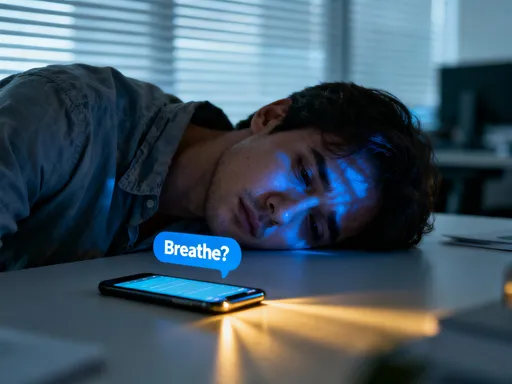
I can’t believe I used to work like that: How a health chatbot quietly fixed my burnout
You know that moment—eyes glued to the screen, neck stiff, lunch skipped, and the to-do list still growing? I was drowning in my workday, convinced exhaustion was just part of the job. Then I tried a simple health chatbot, not for illness, but for living. It didn’t cure me overnight, but it asked the right questions at the right time: “Have you stood up today?” or “When did you last breathe deeply?” Small nudges, big changes. This isn’t about medical miracles—it’s about how a quiet voice in my pocket helped me reclaim focus, energy, and peace during the busiest hours. And you don’t need a diagnosis to benefit.
The Breaking Point: When “Normal” Work Life Felt Anything But
It started with a Tuesday. Not a crisis day, not a deadline explosion—just another packed schedule, like every other. My morning began with coffee in one hand and emails in the other, rushing to prep for a meeting before the sun even cleared the rooftops. By 10 a.m., I was already three Zoom calls deep, my shoulders creeping toward my ears, my lower back aching from sitting too long in the same position. I skipped breakfast, then lunch, telling myself I’d eat “later.” But later never came. Instead, I reached for another coffee, then a chocolate bar from the drawer—anything to keep the engine running.
By 3 p.m., I felt foggy, jittery, and strangely hollow. My vision blurred for a second—just a flicker—and I had to close my eyes. That’s when my colleague Sarah paused mid-sentence during our call and said, “Hey… are you okay?” Her voice was soft, concerned. And something about that moment cracked me open. I hadn’t realized how bad I looked, how bad I felt. I mumbled something about “just tired,” but the truth was heavier: I was disconnected. From my body. From my breath. From myself. I wasn’t lazy. I wasn’t weak. I was running on a system that rewarded pushing through, not pausing to recharge. And that system was failing me.
Burnout didn’t hit like a storm. It crept in like a slow leak—quiet, invisible, until one day the floor gave way. I wasn’t sick, but I wasn’t well. I was surviving, not thriving. And I knew something had to change. But what? Therapy? A vacation? A career shift? All of that felt too big, too far off. What I needed was something small—something I could do today, in the middle of this life I was already living. That’s when I stumbled on a health chatbot, almost by accident. And honestly? I didn’t expect much. But what it gave me wasn’t a fix—it was a friend. A quiet, consistent, thoughtful friend who remembered what I forgot.
Discovering the Calm in the Chaos: My First Real Conversation with a Health Platform
I downloaded the app after reading a short article about digital wellness tools. Honestly, I was skeptical. I’d tried meditation apps before—they felt too structured, too demanding. “Sit for 20 minutes in silence”? Not happening. But this one was different. It wasn’t about long sessions or perfect posture. It was about showing up as I was. The first time it messaged me, I was mid-sentence in an email, my fingers flying across the keyboard. A gentle pop-up appeared: “You’ve been typing for 87 minutes. Want to take a 2-minute stretch break? I’ll guide you.”
I almost dismissed it. Another notification. Another demand on my time. But something about the wording felt… kind. Not pushy. Not judgmental. Just there. So I paused. And for two minutes, I followed a simple series of stretches—neck rolls, shoulder drops, a seated twist. No music, no voiceover, just text prompts and a timer. When it ended, I didn’t feel transformed. But I did feel… lighter. My shoulders had dropped. My breath was deeper. And for the first time in hours, I was aware of my body again.
That was the beginning. The app didn’t ask for hours of my time. It didn’t require me to download extra tools or wear a device. It met me where I was—with my laptop, my phone, my messy desk, and my tired mind. And slowly, I started to look forward to its messages. “Have you had water today?” came with a little droplet emoji. “Try three deep breaths before your next meeting,” it suggested, and I did. Not because I had to, but because it felt like someone was checking in—like I mattered beyond my productivity.
What surprised me most was how human it felt. The language was warm, simple, and never clinical. No jargon. No pressure. Just small, doable invitations to care. And because the timing was smart—never during a meeting, never at 7 a.m.—I didn’t resent it. It became a companion, not a chore. I started calling it my “quiet coworker,” the one who remembered to breathe when I forgot.
From Crisis to Consistency: How Daily Nudges Built New Habits
Here’s what no one tells you about burnout: it’s not just about working too much. It’s about losing the rhythm of care. The small rituals that keep us grounded—drinking water, moving your body, pausing to breathe—fade into the background when you’re in survival mode. And once those habits disappear, it’s hard to bring them back. Willpower alone doesn’t cut it. You need support. And that’s exactly what the chatbot became—a gentle scaffold for rebuilding my daily rhythm.
At first, the reminders felt almost silly. “Time to stand up!” it would say, and I’d roll my eyes—but then I’d do it. “How are you feeling right now? Tap one emoji.” I’d sigh, tap a yellow face, and go back to work. But over time, something shifted. Those tiny moments started to add up. Standing up every hour became normal. Taking three deep breaths before replying to a stressful email became automatic. I wasn’t doing anything dramatic—just small, consistent acts of self-kindness.
One of the most powerful features was the mood check-in. Every evening, the app would ask, “How did your energy feel today? High, medium, low?” and “What’s one thing you did well?” At first, I rushed through it. But after a few weeks, I noticed patterns. On days I took breaks, my energy stayed steadier. On days I skipped water, I felt sluggish by 4 p.m. On days I answered the “one thing you did well” question—really answered it—I went to bed feeling prouder, calmer.
It wasn’t magic. It was mindfulness, supported by technology. The chatbot didn’t replace my inner voice—it amplified it. It helped me hear the quiet wisdom I’d been ignoring. And the best part? It didn’t require motivation. On days I felt awful, it didn’t scold me. It just said, “Even one deep breath counts.” And that made all the difference. Slowly, I stopped seeing self-care as a luxury and started seeing it as part of my job—as essential as my laptop or my calendar.
Beyond the Individual: When Your Wellness Tool Helps the Whole Team
I didn’t plan to talk about the app at work. It felt personal, almost private. But one afternoon, during a long team call, I quietly followed a breathing exercise from the chatbot. Just three slow inhales and exhales. When the call ended, my colleague Mark turned to me and said, “You seemed really calm in there. How’d you do that?” I laughed and told him about the two-minute breath break. He looked intrigued. “Can it send me one of those?”
That small moment sparked something. I shared the app with our team, not as a mandate, but as a suggestion. “No pressure,” I said. “But if you ever feel overwhelmed, it’s like having a calm friend in your pocket.” To my surprise, three people downloaded it that week. And then, something beautiful happened: we started sharing tips. One teammate began using the stretch reminders and posted a photo of herself doing a seated twist at her desk. Another started ending meetings with, “Let’s all take three breaths before we go.”
Our manager noticed. Instead of just asking, “Are we on track?” she began adding, “How’s everyone’s energy today?” It wasn’t performative. It felt genuine. And slowly, our team culture began to shift. We introduced “no-camera minutes” during long calls, inspired by the app’s focus on mental recovery. We stopped glorifying overwork. We started celebrating balance.
What I realized is that personal wellness doesn’t have to stay personal. When shared with care, it can ripple outward. We didn’t need a company-wide wellness program or a fancy retreat. We just needed small, human moments of connection—and the tools to support them. The chatbot didn’t fix our workload, but it gave us a way to handle it with more grace, more presence, and more kindness toward ourselves and each other.
Privacy Without Paranoia: Trusting Tech With Your Inner Life
I’ll be honest: I had concerns. Sharing my stress levels? Logging my mood every night? Letting an app “know” how tired or anxious I felt? That felt vulnerable. In a world where data is constantly mined and sold, I didn’t want my inner life turned into a product. So I did my homework. I read the privacy policy—yes, actually read it. I looked into how the company handled data, and what I found reassured me.
The app didn’t sell my information. It didn’t share it with employers or advertisers. My mood logs, my breathing habits, my check-ins—none of it was tied to my name in their system. It was anonymized, encrypted, and used only to personalize my experience. I could delete my data anytime. I could pause the app. I was in control.
What mattered most was transparency. The company didn’t hide behind fine print. They explained things clearly: “We collect this to help you. Not to sell it. Not to track you. To serve you.” And because I could see and manage my data, I felt safe. I wasn’t being watched—I was being supported.
This isn’t true for every app, I know. That’s why I always say: do your research. Look for tools that prioritize your dignity, not just your data. Choose platforms that are clear, honest, and respectful. Because you shouldn’t have to choose between caring for yourself and protecting your privacy. You can—and should—have both.
Not Just for “Sick Days”: Rethinking When We Use Health Tech
We tend to think of health tools as emergency kits—something to pull out when we’re already broken. A pain in the side? Time to see a doctor. Feeling anxious? Maybe try therapy. Burned out? Take a vacation. But what if we used these tools not just in crisis, but in the quiet moments of everyday life? What if we treated mental and physical care like brushing our teeth—routine, preventive, essential?
That’s the shift the chatbot helped me make. I didn’t start using it because I was diagnosed with anything. I started because I was tired. Because I forgot to drink water. Because I sat too long and felt stiff. Because I wanted to feel better—not fixed, not cured, just better. And that’s okay. You don’t need a label to deserve care.
Using the app on “normal” days was more powerful than using it during hard ones. It wasn’t about reacting to burnout—it was about preventing it. The morning breathing prompts helped me start the day with intention. The hydration reminders kept me from that 3 p.m. crash. The end-of-day reflections helped me close the workday with gratitude, not guilt.
This changed how I see wellness. It’s not a reward for surviving a crisis. It’s a practice. A daily choice. And technology can be a quiet ally in that practice—not a replacement for human connection, but a bridge to it. When we normalize using health tools every day, we stop seeing self-care as selfish. We start seeing it as smart. As sustainable. As part of what it means to show up well—for our work, our families, ourselves.
The Quiet Revolution: How Small Tech Can Restore Big Humanity at Work
I can’t believe I used to work like that. Rushing. Rushing. Rushing. Measuring my worth by how much I could endure. How much I could push through. I thought that was strength. But real strength? It’s knowing when to pause. When to breathe. When to say, “I matter, even when I’m not producing.”
The health chatbot didn’t change my job. It changed me in my job. It helped me reconnect—with my body, my breath, my sense of self. It gave me back small moments of peace in a day that used to feel like a race. And in those moments, I found something I didn’t know I’d lost: presence. The ability to be here, now, not just surviving, but living.
What’s powerful about this kind of technology isn’t the algorithms or the data. It’s the intention behind it. It’s a tool designed not to distract, but to remind. Not to drain, but to restore. It’s a quiet voice that says, “You’re doing your best. And that’s enough. Now, have you stood up today?”
And here’s the thing: you don’t need a dramatic overhaul to feel better. You don’t need to quit your job or move to a cabin in the woods. You just need one small nudge. One breath. One moment of care. Because when we weave those moments into our days, we don’t just survive the workday—we reclaim it. We show up not as machines, but as humans. Whole, imperfect, and worthy of care.
So if you’re feeling stretched thin, if you’re skipping lunch again, if your neck is stiff and your mind is foggy—know this: it’s not weakness to ask for help. It’s wisdom. And sometimes, that help comes in the quietest form: a message on your phone, a gentle question, a reminder that you’re more than your to-do list. You always were.